

Podcast monitoring
On the roadmapRadio is live. Podcast is next.
A brand sponsoring a podcast has already committed budget to audio — the warmest signal a broadcast seller can get, and the easiest one to miss. The detection engine that catches every spot, sponsorship, and live-read on radio is expanding to podcast. We are building it with design partners, not behind closed doors.






What it will be
One engine. Every audio channel.
Podcast ad monitoring is the automated tracking of advertising inside podcast episodes — which brands sponsor which shows, in which formats, and how their campaigns evolve. Spotwise is extending its radio engine to do exactly that.
The advertiser does not think in channels — they think in audiences. A brand running host-read podcast ads is the same buyer your sellers pitch radio to, already convinced that audio works. Today, that signal lives outside your view: host-reads are conversational, unpredictable, and nearly impossible to track across a show library without listening manually.
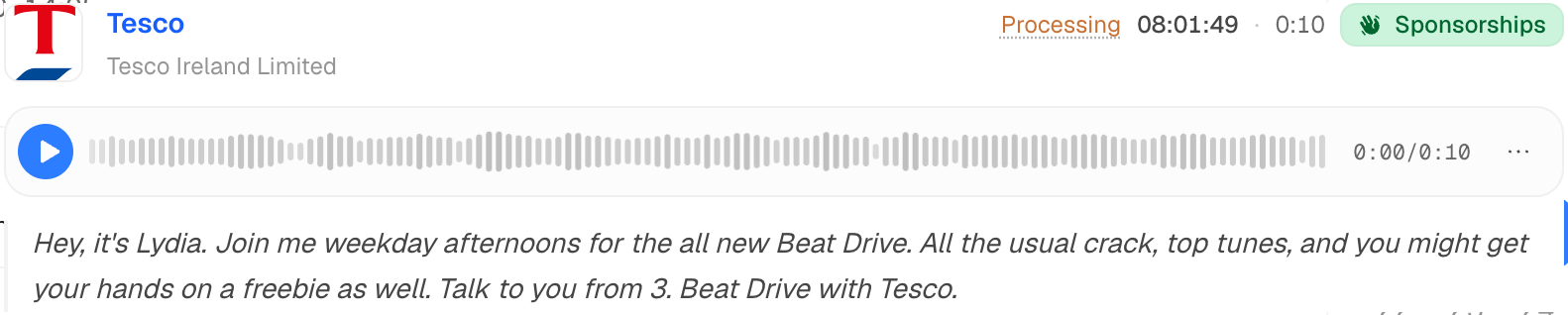
Spotwise already solves the hard version of this problem on radio: spots, sponsorships, and live-reads detected around the clock, transcribed and classified in real time. Podcast is the next channel for that engine — processed episodes instead of live streams, the same detection logic, the same structured sales signals. It is on the roadmap, and the broadcasters who join as design partners decide what ships first.
- Episode ingestion
Where radio means live streams, podcast means published episodes. Spotwise is extending its ingestion layer to process new episodes from the feeds that matter in your market as they are published.
- Ad detection — including host-reads
Pre-roll spots follow a pattern; any tool can catch them. The Spotwise engine was built for irregular, spoken-word ad formats on radio — and that capability is what we are bringing to host-reads and branded segments.
- Brand attribution & transcription
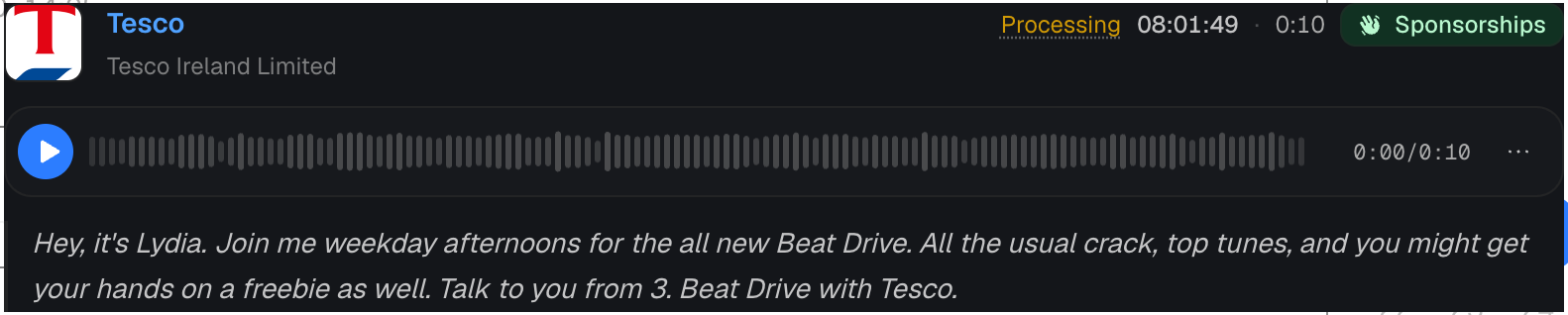
Each detected placement gets the same treatment radio events get today: transcribed, attributed to the sponsoring brand, classified by category, and filed in your searchable library.
- Signals into your pipeline
Detected podcast advertisers will land where radio signals already land — your dashboard, your alerts, your sales workflow — so a podcast sponsorship becomes a reason to call, not a thing you never heard.
What we are building
The roadmap, in concrete terms.
These are the capabilities the podcast expansion is designed around — extensions of what the engine already does on radio, shaped with design partners.
- Feed-level coverage
- Monitoring scoped to the shows that matter to your market — not a generic global index. Design partners tell us which feeds, verticals, and regions to prioritise first.
- Host-read detection
- Conversational endorsements, sponsored segments, and produced inserts alike. The engine that already handles live-reads on radio is being tuned for the podcast equivalent.
- New-sponsor alerts
- The alert rules your team uses for radio brands and keywords will extend to podcast — so a brand entering audio through a podcast surfaces before it becomes common knowledge.
- Cross-channel view
- Radio and podcast activity for the same brand, in one place. When both channels feed the same dashboard, your team pitches the full audio picture — not half of it.
Who it serves
Built for sellers who think in audio, not channels.
Radio sales teams going converged
If your station sells podcast, streaming, or digital audio alongside broadcast, you need to see where prospects already spend across all of it. Podcast signals complete the picture your radio monitoring already paints.
Commercial leadership
Budget is moving into podcast year over year. Leaders who can see that movement — which categories, which shows, which brands — set strategy on data, not on the trade press.
Multi-market broadcast groups
Groups already monitoring radio across countries with Spotwise get the most from the expansion: one engine, one dashboard, one methodology — extended to a second audio channel as it ships.
Why join now
The case for getting in before launch.
Catch advertisers early in their audio journey
Many brands start in podcast before they ever buy broadcast. Seeing those sponsorships means intercepting an advertiser already sold on audio — before your competitors know they exist.
Pitch the whole audio footprint
Converged audio deals go to the seller who can speak to a brand’s entire presence — radio and podcast together. Cross-channel intelligence is the difference between a rate-card pitch and a strategic one.
No manual show-by-show research
Tracking sponsorships by listening to episodes does not scale past a handful of shows. Automated detection gives your team the coverage no amount of manual listening can — the same shift radio monitoring already delivered.
A seat at the table, not a waitlist
Design partners decide which markets, formats, and workflows ship first. Joining now means the podcast product is built around how your team sells — not adapted to it later.
Help build it
The roadmap is still being written.
Book a demo, see what the engine does on radio today, and tell us what podcast coverage should look like in your market.
Common questions
Straight answers about the podcast roadmap.
Related solutions
The next channel
Radio is proven. Shape what comes next.
Somewhere in a podcast feed, a brand your team has never called is committing budget to audio. The engine that would catch it on radio is expanding to podcast — and the broadcasters who join now decide how.